Asbestos hides inside ordinary building materials. A ceiling tile, a floor tile, a scrap of pipe wrap: none of them look dangerous, and none of them can be identified by eye. A lab test is the only thing that gives you a straight answer.
Mold Removal Winnipeg takes the sample for you and sends it to an accredited laboratory. When the report comes back, we explain it in plain language and tell you what your options are. Call (204) 789-1514 to book a test.
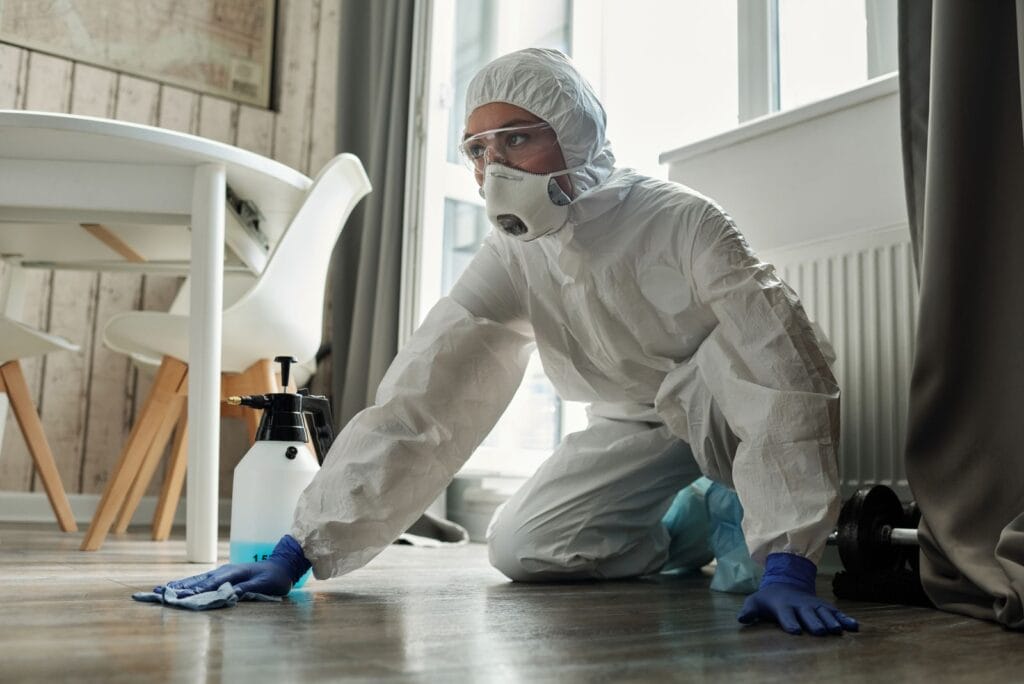
Asbestos testing means taking a small piece of a suspect material and sending it to a laboratory. A technician studies the sample under a microscope and reports whether asbestos fibres are there, which type they are, and how much of the material is asbestos.
There is more than one way to test, and each one answers a different question. Bulk material sampling tells you whether a specific material contains asbestos, so it is the test to book before a renovation. Air sampling tells you whether fibres are floating in the air right now. A pre demolition inspection tells you which materials in the building have to be dealt with before a wall comes down.
We tell you which one fits your situation when you call, and we agree on the number of samples with you before anyone cuts into anything.
The age of the building is the first thing to check. Asbestos was used heavily in construction until the 1980s, so a home built before 1980 is the most likely candidate. Buildings put up in the 1980s and 1990s can still contain it. After the 1990s it is unlikely.
The second thing to check is what you are about to do. Asbestos that sits still and stays in good shape is usually not a problem. Cutting, drilling, sanding, or tearing out old material is what puts fibres in the air, and fibres that reach the lungs can cause serious illness years later. That is why the test comes before the work, not after.
Testing also settles questions that have nothing to do with a renovation. Buyers and sellers want the answer in writing. Landlords want it on file. And if a ceiling or a length of pipe wrap has been damaged by water, you want to know what you are cleaning up before you touch it.
Start with the age of the building. Homes and buildings put up before 1980 are the most likely to contain asbestos, and buildings from the 1980s and 1990s can still have it. Test before a renovation, a demolition, or a new roof, and test when insulation, floor tiles, or a textured ceiling has been damaged. Buyers, sellers, and landlords also ask for a lab report in writing.
Bulk material sampling takes a small piece of a suspect material, so it answers whether that material contains asbestos. Air sampling collects the air itself, so it answers whether fibres are floating in the room right now.
Most homeowners planning work need the material test. We also run pre demolition inspections, which list the materials that have to be handled before a wall comes down.
We walk the property with you and note every material that could contain asbestos. We ask about the age of the building and any past renovations, then photograph and mark the suspect areas. Before anything is cut, we agree on how many samples are needed and give you the price for the visit.
It depends on how many different materials look suspect. Each material is a separate test, because one ceiling tile tells you nothing about the floor below it. We settle the number with you during the walkthrough, so there are no surprises. Call (204) 789-1514 and we can give you a better idea once we know the property.
Yes. The technician seals off the spot before any cutting starts and wets the material down so fibres do not go into the air. Samples are double bagged and labelled, and we patch the spot before we leave. You never have to touch or cut the material yourself.
A home kit leaves you to cut into the material yourself, which is the exact moment fibres get into the air. It also cannot tell you which type of asbestos you have, and there is no easy way to know whether you sampled the right spot or the right layer.
An accredited laboratory identifies the fibres under a microscope. That is the written result a contractor, a buyer, or an insurer will accept.
The sample goes to an accredited laboratory, and we call you as soon as it reports back. Turnaround depends on the lab and the type of test, so ask us when you book and we will tell you what to expect. That way you can plan the work around it.
The report lists every sample we took and what the lab found in it. For material samples it names the type of asbestos and the percentage in the material. For air samples it gives the fibre count in the air you breathe. We go through the report with you line by line, so you know what each result means.
A positive result means asbestos was found in that material, in the amount the report states. Material in good shape that nobody disturbs can often stay where it is, but material that is damaged, crumbling, or in the way of your project has to come out or be sealed.
Keep the room closed and stop work in that area until you have a plan. Removal is a separate job for a certified abatement crew, and we handle that too.
No. A negative result covers the samples we took, not every material in the building. That is why we record exactly which room and which material each sample came from. If you open a wall later and find something you did not expect, stop and call us.
Clearance air sampling is how you confirm the work is finished. We collect air samples in the area once the job is done, and the laboratory counts the fibres left in the air. It gives you proof in writing that the space is clean before anyone moves back in.
The price depends on how many materials need sampling and which test each one calls for. You get the cost for the visit up front, before anything is cut. Call (204) 789-1514 and we can walk through it with you.