Mold spreads fast in a damp home. A small leak behind a wall can turn into a health problem and a large repair bill in a matter of days. Our IICRC certified technicians find the moisture, remove the mold, and dry the space so it does not come back.
If you see water stains, dark patches on drywall, or you smell a musty odour, call us at (204) 789-1514. We answer 24/7 and we work with your insurance company.
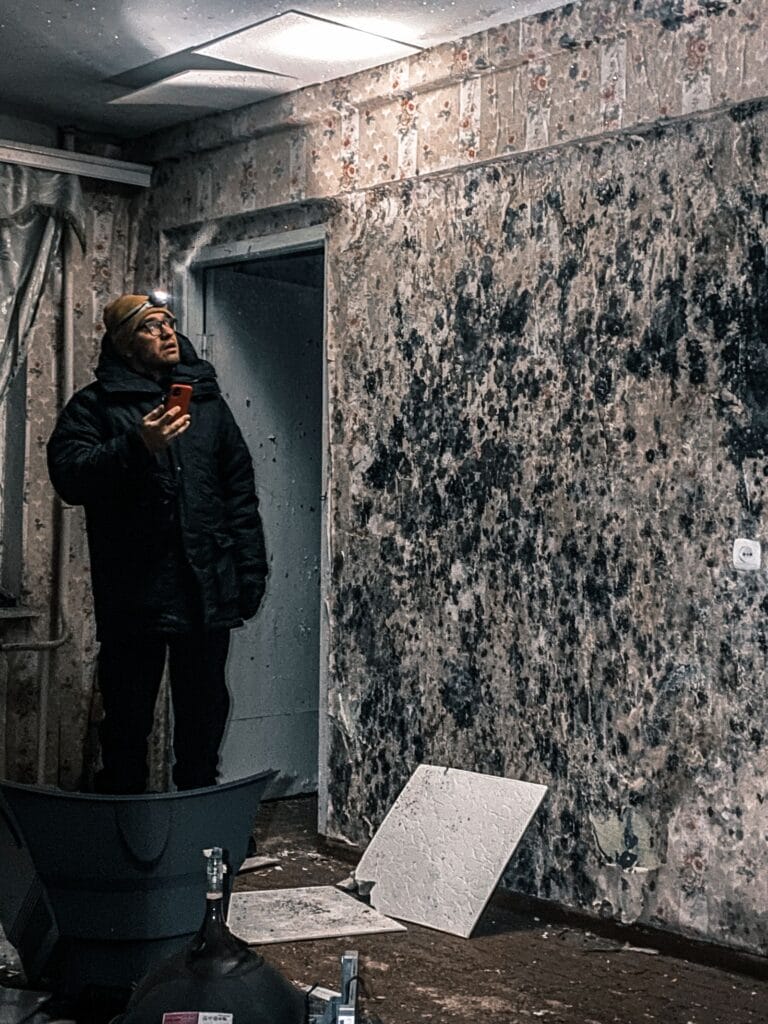
Mold is a fungus. It grows in wet and damp places and feeds on organic material like wood, paper, drywall, and fabric. It spreads through spores that are far too small to see.
Spores are always in the air, indoors and out. They only grow when they land on something damp. In Winnipeg that happens more often than people think: spring basement flooding, roof leaks, and plumbing problems all leave behind the moisture mold needs.
Mold affects your health. Reactions range from mild allergy symptoms to serious breathing trouble. People with asthma, allergies, or a weak immune system tend to feel it first.
Black mold gets the most attention, but many types cause problems. Mold also eats away at whatever it grows on. The longer it sits, the more damage it does to your walls, your floors, and your belongings.
A musty, damp odour is often the first sign, before anything shows on the surface. Look for dark spots or stains on drywall, wood, tile grout, and ceiling tiles, and for paint that is bubbling or peeling.
Allergy symptoms that ease when you leave the house are another clue. Much of the mold in a home grows behind walls or above ceilings, so an inspection is the only way to know how far it has gone.
It can. Mold spores are known to trigger coughing, sneezing, headaches, congestion, and irritated eyes, nose, and throat.
People with asthma, allergies, or a weak immune system usually feel it first. If someone at home feels better when they are away from the house, take that seriously and call us at (204) 789-1514.
Bleach is not a fix. On porous material like drywall and wood, the growth runs below the surface, so the colour fades while the mold keeps going underneath.
Scrubbing also pushes spores into the air and carries them into clean rooms. And if the moisture that fed the mold is still there, it comes back either way.
Not if the moisture that fed it is gone. Taking out the growth is only half the job, so we find the water source, dry the space, and bring moisture levels down before we finish.
You get a written report on the cause and what to watch for in that part of the house. If the leak is repaired and the area stays dry, mold has nothing to grow on.
It depends on how much mold there is, where it is, and what it grew on. A small patch in one room is a short job.
Mold inside walls, insulation, or a flooded basement takes longer, because the area has to be sealed off, cleaned, and then dried until the moisture readings come back to normal. We give you a timeline after the inspection. Call (204) 789-1514 and we will come and look.
Often you can stay. We seal off the work area, run air scrubbers, and shut down the HVAC system so spores do not travel through the rest of the house.
If the growth is spread through several rooms, or someone at home has asthma or another health problem, staying elsewhere for part of the work is the safer choice. We tell you what to expect before the crew starts.
That depends on the cause and on your policy. Insurers usually treat mold that follows a sudden problem, such as a burst pipe, differently from mold that grew slowly behind an old leak.
We photograph the damage, document the work, and deal with your insurance company so the claim keeps moving. Call us and we will tell you what your provider is going to ask for.
We start with an inspection and testing to find the growth and the moisture behind it. The work area is sealed off so spores do not spread, and air scrubbers clean the air while the crew works.
Mold is removed with antimicrobial treatment, and material that cannot be saved is taken out and disposed of. Then we dry the space, clean and sanitize every affected surface, and check the area before the job is closed.
They tell you very little. A kit can show that something is growing on the surface you swabbed, but spores are in the air of every home, so a positive result on its own says nothing about how big the problem is.
A kit also cannot find what is behind a wall, under a floor, or in the ductwork. An inspection with moisture readings gives you an answer you can act on.
Spores are already in the air, indoors and out. They only start to grow when they land on something wet, so the real cause is always moisture.
Roof leaks, burst or dripping pipes, a sink drain that leaks into the cabinet, poor ventilation, and spring basement flooding are the usual sources in Winnipeg. Fix the water and you take away what mold needs.
Yes. Mold feeds on what it grows on, so wood, drywall, carpet, ceiling tiles, wallpaper, and fabric break down the longer it sits.
That is the difference between a cleanup and a rebuild. Caught early, the work is usually cleaning and drying. Left for months, floor boards, framing, and whole sections of wall have to come out.
Mildew is a surface mold. It stays flat, is usually white or grey, and wipes off hard surfaces such as tile and shower walls.
Other molds grow into the material itself, look fuzzy or slimy, and show up as black, green, or brown patches. If it keeps coming back after you clean it, or it is on drywall or wood, it is not a simple mildew problem.